The area of photonics has actually experienced impressive advancements, especially in the growth of different modulators that play essential functions in numerous optical applications. Among these, fiber acousto-optic modulators (AOMs) and their many variants, such as space AOMs and free-space AOMs, stand out due to their convenience and effectiveness.
These lasers produce light with an extremely narrow spectral width, making them ideal for different detailed applications, consisting of systematic interaction systems and high-resolution spectroscopy. This assimilation shows the trend in the direction of increased compactness and effectiveness in optical systems without compromising performance.
The energy of fiber optic delay lines can not be overstated, particularly in making advanced optical systems that need specific timing and synchronization. These delay lines harness the fundamental residential or commercial properties of fiber optics to take care of light signals efficiently, enabling designers and researchers to discover high-speed information transmission or intricate timing experiments with marginal loss of fidelity. The electric optical fiber delay line offers as a main part in this context, helping with the manipulation of light signals to match particular demands.
Discover fiber aom the latest innovations in photonics, focusing on the important function of fiber acousto-optic modulators in enhancing laser applications, telecoms, and precision optical systems for varied markets.
Modulators are important in laser systems, playing an essential duty in transforming continual wave results into pulse layouts. Acousto-optic Q-switch modulators offer this exact objective, allowing rapid modulation of laser outcomes, which results in high-peak power pulses. This capability is vital in applications such as material processing, where precision and speed are important. The option in between an AOM and an electro-optic modulator (EOM) frequently emerges in conversations surrounding modulation strategies. While both offer the main feature of pulse modulation, an AOM commonly shows higher optical power taking care of abilities and faster switching times contrasted to EOMs, making AOMs particularly valuable in high-energy laser applications.
The distinction in between acousto-optic switches and modulators is an essential aspect of recognizing exactly how these devices work in various circumstances. Acousto-optic switches effectively redirect beams, therefore allowing various transmitting functionalities within optical systems. In comparison, a modulator changes the light’s residential or commercial properties, straight influencing the beam of light’s qualities. This difference marks their particular roles in laser systems and highlights the diversity of applications each device deals with.
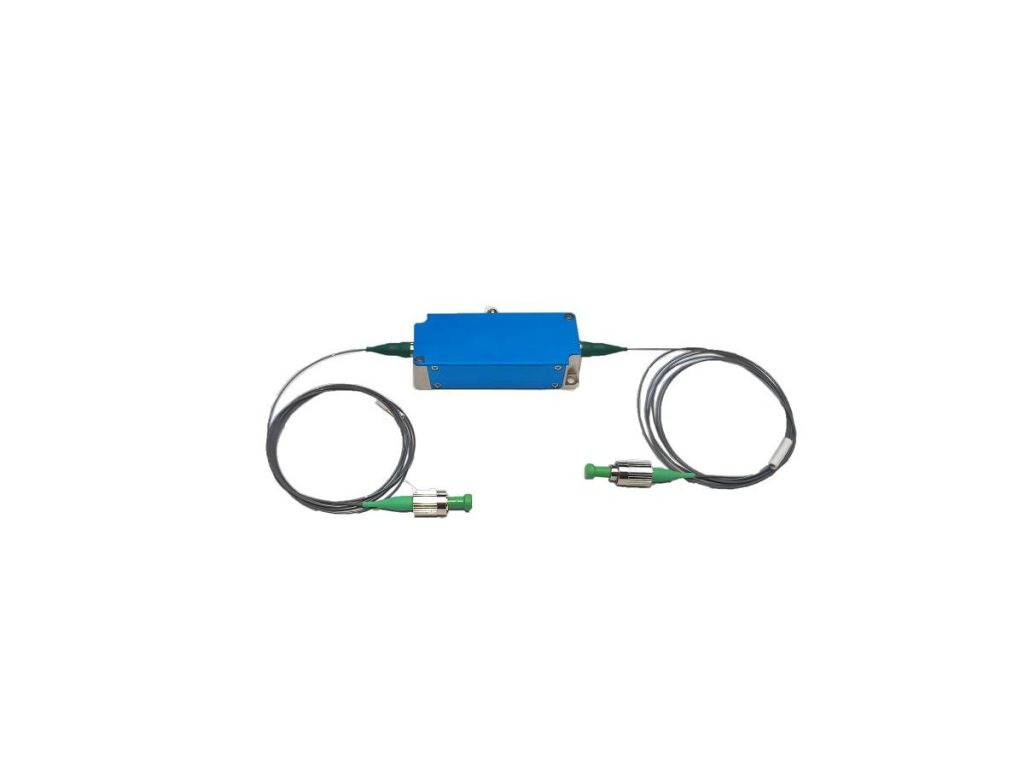
Acousto-optic devices have actually significantly acquired traction in the market, driven by the rising demand for sophisticated optical innovations. The acousto-optic modulator market is seeing considerable growth because of applications in telecoms, armed forces systems, and commercial production. These devices are important for frequency moving, light beam guiding, and signal handling. As innovation advances, firms are establishing cutting-edge solutions to resolve the demands for miniaturization, enhanced performance, and cost-effectiveness.
The characteristics of narrow linewidth laser sources are fundamental to particular applications, where coherence and precision are vital. Narrow linewidth fiber lasers exhibit secure discharge with minimal spectral spread, dealing with applications in fiber-optic interactions and sensing modern technologies. These high qualities are necessary when handling long-distance information transmission, where signal destruction can substantially influence the quality of details received. Coupling these fibers with innovative modulators allows researchers to check out new frontiers in optical interaction systems.
Acoustic optical deflectors add to the versatility of optical systems, supplying a method to adjust light dynamically and successfully by utilizing acoustic waves as the regulating system. Such devices can be discovered in different applications, from laser scanning systems to innovative imaging techniques. By utilizing the principles of acousto-optics, these deflectors help in attaining rapid and specific changes in the beam’s trajectory without the need for intricate mechanical components.
In checking out the types of pulse modulation, one understands the ins and outs and range intrinsic in the area. Pulse modulation techniques, such as pulse-width modulation (PWM) and pulse-position modulation (PPM), allow control of light based upon discharge to create differing signal types. These strategies cultivate improvements in photonics and electronics, from managing laser outputs to boosting the performance of fiber optic systems.
Further consideration of optical passive components discloses their vital duty in boosting system reliability. These components, that include couplers, isolators, and filters, promote the organization and administration of light within intricate optical configurations without the need for energetic participation. Their payment to general system efficiency is vital, primarily when incorporated with modulators and various other vibrant optical devices. Significantly, the seamless assimilation of energetic and passive components specifies the ability of contemporary photonic systems.
The growing focus on space applications highlights the requirement for durable and reliable optical systems that can work effectively in extreme conditions. Space acousto-optic modulators, particularly, accommodate the distinct demands of space objectives, where factors such as radiation direct exposure and temperature level changes can significantly impact functionality. The growth of space-grade acousto-optic devices guarantees that interaction and information collection remain undisturbed in the extreme environments of space.
Acousto-optic Q-switching represents among one of the most effective approaches of producing high-energy pulses, crucial for applications ranging from laser noting to medical procedures. The modulation abilities intrinsic in AOMs permit them to adapt to differing demands, enhancing pulse period and energy output. As a result, they supply an ingenious pathway to raise laser applications across varied areas.
As we dive additionally into the future of photonics, it ends up being progressively clear that advancement in laser modulators and acousto-optic innovations is pivotal. The innovations in modulator drivers boost the effectiveness with which AOMs and EOMs operate, enabling much faster and extra trustworthy efficiency. The crossover in between growths in modulation and the raising demand for greater data transfer and lower latency in communication systems recommends a future abundant with opportunities for reinforced optical interactions.
Recognizing the essential mechanics that underpin acoustic optical modulators will certainly cause exceptional design and efficiency renovations as research continues to thrive. The exploration of brand-new products, combinations, and methods in locations like micro-nano construction will likely produce devices with even finer control and expanded operational lifetimes. These improvements not just guarantee improved capability for existing systems however invite totally new applications within arising technologies in quantum computing, robotics, and advanced manufacturing.
In recap, the domain of acousto-optic modulators and related fiber-optic technologies personifies rapid development and complexity, functioning as fundamental components within numerous modern optical applications. With the growing need for accuracy and high efficiency in numerous sectors, the development of acousto-optic devices, such as fiber AOMs, proceeds to advance, adapting to brand-new difficulties and opportunities. As designers and scientists press the limits of innovation, these devices will certainly remain main to shaping the future of optical interaction, laser applications, and beyond, declaring a new age of technological advancement.